Tosca: Meet The Cast – Carmen Giannattasio

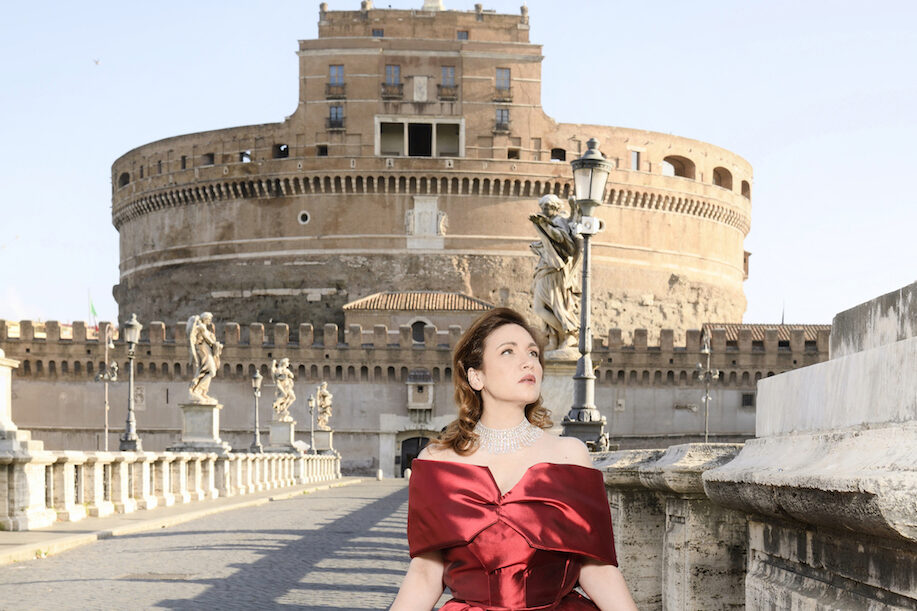
Italian soprano Carmen Giannattasio stars as Floria Tosca in Oxford International Opera’s upcoming production of Puccini’s opera. The Telegraph once described her as ‘the Anna Magnani of opera’. In the first of a series to get to know our cast and creative team for this exciting debut performance, Carmen answered some questions about her upcoming role…
Who is your character, Floria Tosca?
Floria Tosca is a woman of extraordinary emotional intelligence, although she does not always have the time to rationalise what she feels. She is an artist, a famous singer, a woman accustomed to being looked at, admired and perhaps even idealised. But privately she is much more vulnerable than the public image suggests. What fascinates me is the coexistence of strength and fragility in her. She can be jealous, impulsive, deeply sensual, devout, proud and extraordinarily courageous, sometimes within the space of a few minutes. I do not see her as melodramatic. On the contrary, everything she does is very concrete, because the circumstances are extreme. She loves completely, and when that love is threatened, she reacts with her whole being.
You’ve played Tosca many times before; is there anything new you’re bringing to this production?
I think a role like Tosca changes with you. You may sing the same notes and say the same words, but after years of life and experience you cannot really be the same woman on stage. Earlier in my career, perhaps I was more attracted by Tosca’s theatricality, her temperament, the immediacy of her passions. Now I am increasingly interested in what lies underneath: her fear, her intuition, her intelligence, and also the enormous solitude of this woman at the end of the opera. I am less interested in “playing Tosca” than in allowing her reactions to feel inevitable. The challenge is to remove anything decorative or conventional and make every gesture, every silence and every change of colour come from a real psychological necessity.
Tosca, as a character, crosses many emotions, often quite quickly from one to the next. How do you approach performing these emotions and the relationships we see on stage?
For me, the key is not to think in terms of separate emotions. If you begin by saying, “Now she is jealous, now she is tender, now she is frightened,” the character can become fragmented. I try instead to follow the thought. Emotion is the consequence of thought. Tosca sees something, understands something, misinterprets something, remembers something — and the emotional temperature changes immediately. Puccini writes this with extraordinary precision. Her relationship with Cavaradossi is essential because it gives us the private Tosca: playful, sensual, possessive, affectionate. With Scarpia, everything changes. She enters a psychological battlefield in which she has to understand very quickly what kind of man she is facing and how far he is prepared to go. That evolution is what makes the second act so extraordinary. It is almost a chamber play set inside an opera.
What is your favourite moment in the opera? Why?
It changes, but I have always found the final part of the second act extraordinary. Not only Vissi d’arte, which of course is one of the great moments in the soprano repertoire, but everything that surrounds it. What interests me is the transformation that happens in Tosca. Until then, she is reacting to events. Suddenly she is forced into a moral and existential crisis: she questions everything she has believed in — art, faith, goodness, justice. And only a few minutes later she becomes capable of an act she could probably never have imagined herself committing. That passage from prayer to action is psychologically immense. Puccini gives us almost no time to prepare it, which is precisely why it feels so truthful.
What do you look forward to about performing in Oxford? Is this your first time in the city?
It is not my first time in Oxford. I lived in London for eight years, and when I made my debut at Garsington I came to visit Oxford with my family. I remember being struck by the atmosphere of the city — the architecture, of course, but also this very particular sense of continuity between history, scholarship and everyday life. So returning now to perform feels different. There is already a personal memory attached to the place.
I also think Tosca is particularly interesting in a city like Oxford, because beneath the passion and theatricality of the opera there are very serious questions about power, morality, faith, political violence and the price of individual freedom. Puccini gives us an intensely emotional drama, but never an intellectually simple one. That is something I very much look forward to sharing with the audience.
Cover photo by Mafalda Bompastor
Find tickets to the Oxford International Opera’s performance of Tosca here
Join the Oxford Philharmonic Orchestra alongside international opera stars for the brand-new, fully-staged production of Oxford International Opera, where we will bring Puccini’s Tosca to the stage of the New Theatre in Oxford. Featuring internationally renowned opera singers such as Sir Bryn Terfel, Carmen Giannattasio and Saimir Pirgu, the Oxford Philharmonic will be the fourth protagonist and extra voice on the stage.
The Principal Donor of this production is the Laidlaw Opera Trust.
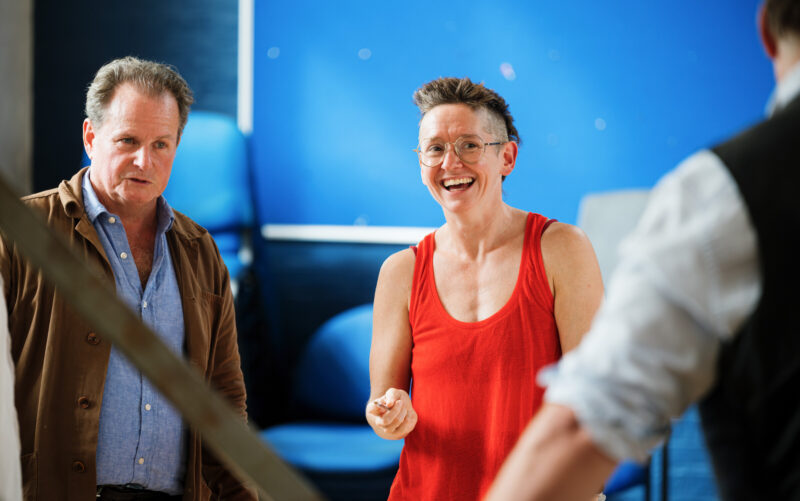
Tosca: Meet The Creatives- P Burton-Morgan
P Burton-Morgan is a librettist, director and Artistic Director of Metta Theatre.
Read More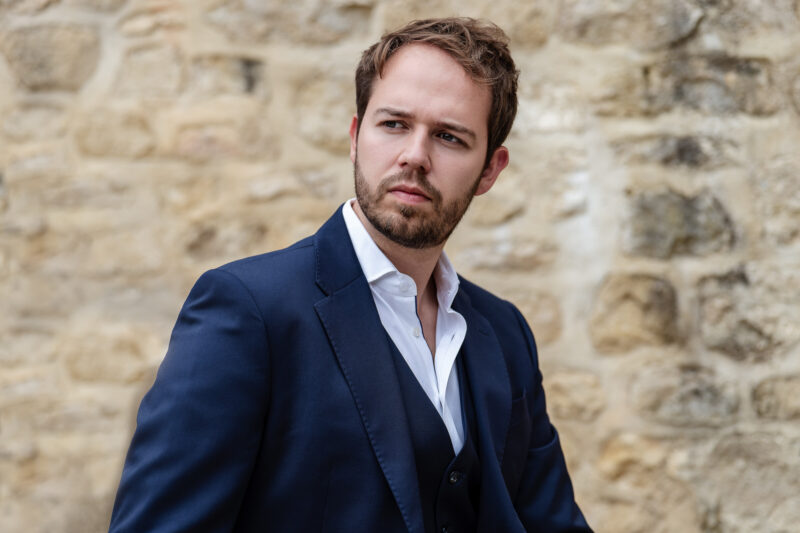
Tosca: Meet The Cast – Jamie Woollard
British bass Jamie Woollard stars as Cesare Angelotti in Oxford International Opera’s upcoming production of Puccini’s opera. He is a Samling Artist and was a BBC Music Magazine ‘Rising Star’ in 2023.
Read More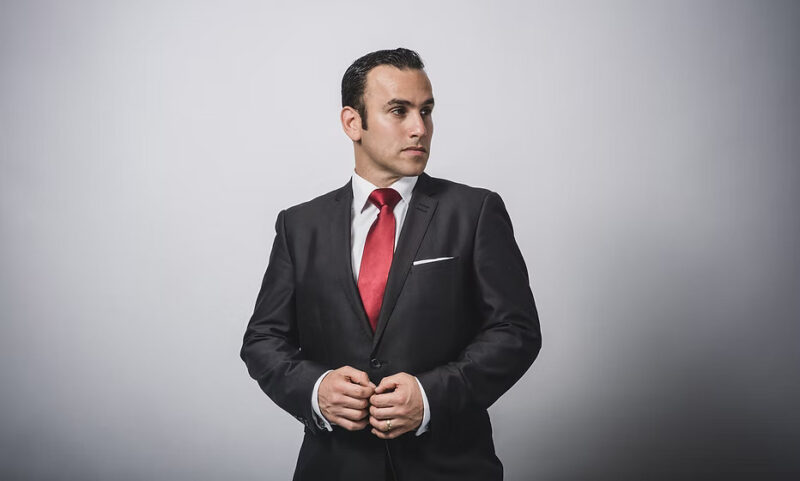
Tosca: Meet The creatives – Anthony Flaum
Anthony Flaum is the producer of Oxford International Opera’s production of Tosca. Next up in our series to get to know our cast and creative team, he answers our questions…
Read More